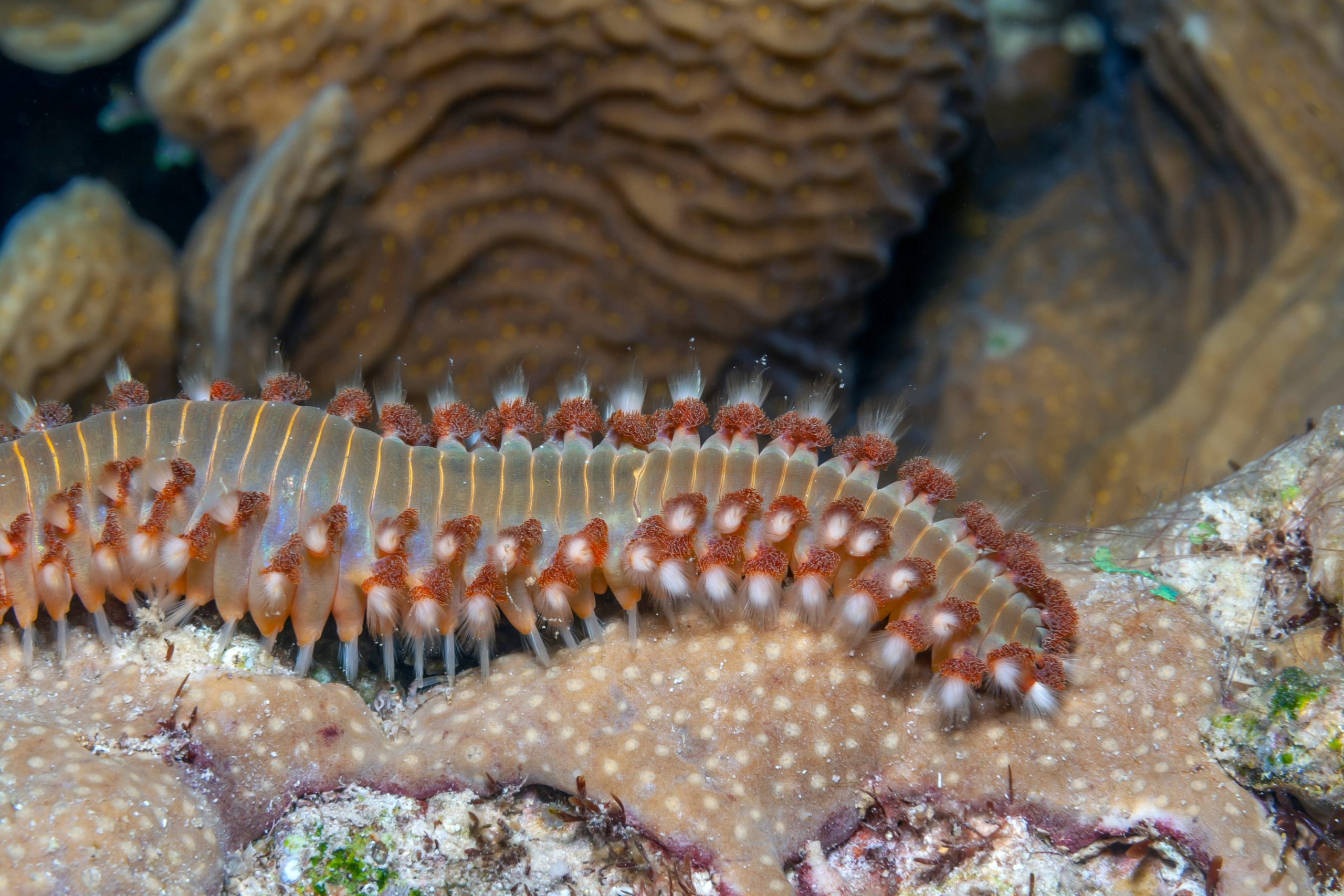

A humble marine worm has just shattered everything scientists thought they knew about the evolution of eyes and vision.
Story Highlights
- Bristleworms possess continuously growing eyes regulated by neural stem cells identical to those found in vertebrate eyes
- Environmental light controls eye development through vertebrate-like c-opsin proteins, suggesting ancient shared mechanisms
- This discovery rewrites the evolutionary timeline of complex vision systems by millions of years
- The findings challenge the assumption that sophisticated eye development is unique to higher animals
The Worm That Sees Too Much
Platynereis dumerilii a.k.a bristleworm, barely longer than your thumb, burrows through ocean sediments worldwide. Yet beneath its humble exterior lies a visual system so sophisticated it mirrors our own. Scientists discovered these worms possess eyes that grow continuously throughout their adult lives, powered by neural stem cells operating under the same biological principles found in vertebrate retinas.
The implications stagger researchers. For decades, the scientific community believed complex eye development represented a pinnacle of vertebrate evolution. This tiny worm just proved that assumption catastrophically wrong. The mechanisms driving human eye development existed in primitive marine creatures long before our ancestors crawled from primordial seas.
Watch:
Ancient Light Sensors Tell Modern Stories
The breakthrough centers on c-opsin proteins. These light-sensitive molecules regulate how the bristleworm’s eyes respond to environmental illumination. When researchers examined these proteins closely, they discovered striking similarities to the c-opsins governing vertebrate vision development. The worm essentially uses the same molecular toolkit that controls how human eyes form and function.
Environmental light directly influences this process. As seasons change and daylight patterns shift, the bristleworm’s eyes adapt accordingly. The neural stem cells at each eye’s rim respond to these light cues, adding new photoreceptive cells precisely when needed. This dynamic growth system mirrors the regenerative capabilities scientists have long sought to understand in human retinal development.
Evolutionary Revelations Reshape Scientific Understanding
This discovery forces a complete reconsideration of evolutionary timelines. The sophisticated eye development mechanisms scientists attributed to advanced vertebrates apparently evolved hundreds of millions of years earlier. Bristleworms represent an ancient lineage, meaning these visual systems developed when Earth’s oceans teemed with primitive life forms.
A tiny ocean worm just revealed a big secret about how eyes evolve
— The Something Guy 🇿🇦 (@thesomethingguy) December 3, 2025
Scientists found that adult bristleworm eyes grow continuously thanks to a rim of neural stem cells similar to those in vertebrate eyes. This growth is surprisingly regulated by environmental light via a…
The neural stem cell networks driving continuous eye growth operate through remarkably conserved pathways. These cellular mechanisms remained so effective that evolution preserved them across vast evolutionary distances. From marine worms to mammals, the fundamental architecture of vision development shows stunning consistency, suggesting these systems represent optimal solutions to environmental challenges.
Implications Beyond Basic Biology
Understanding how bristleworm eyes continuously regenerate offers promising avenues for human medical applications. Researchers studying retinal diseases and vision loss now possess a simpler model system for investigating stem cell-based therapies. The worm’s ability to maintain lifelong eye growth could illuminate pathways for treating degenerative eye conditions. Got a health question? Ask our AI doctor instantly, it’s free.
The findings also demonstrate nature’s tendency to converge on successful solutions independently. When similar environmental pressures exist, evolution repeatedly discovers comparable answers. The bristleworm’s sophisticated visual system developed not through chance, but through the same fundamental biological principles governing all complex life.
Sources:
https://www.sciencedaily.com/releases/2025/12/251202052211.htm
https://scitechdaily.com/this-simple-sea-worm-has-a-secret-eyes-that-never-stop-growing