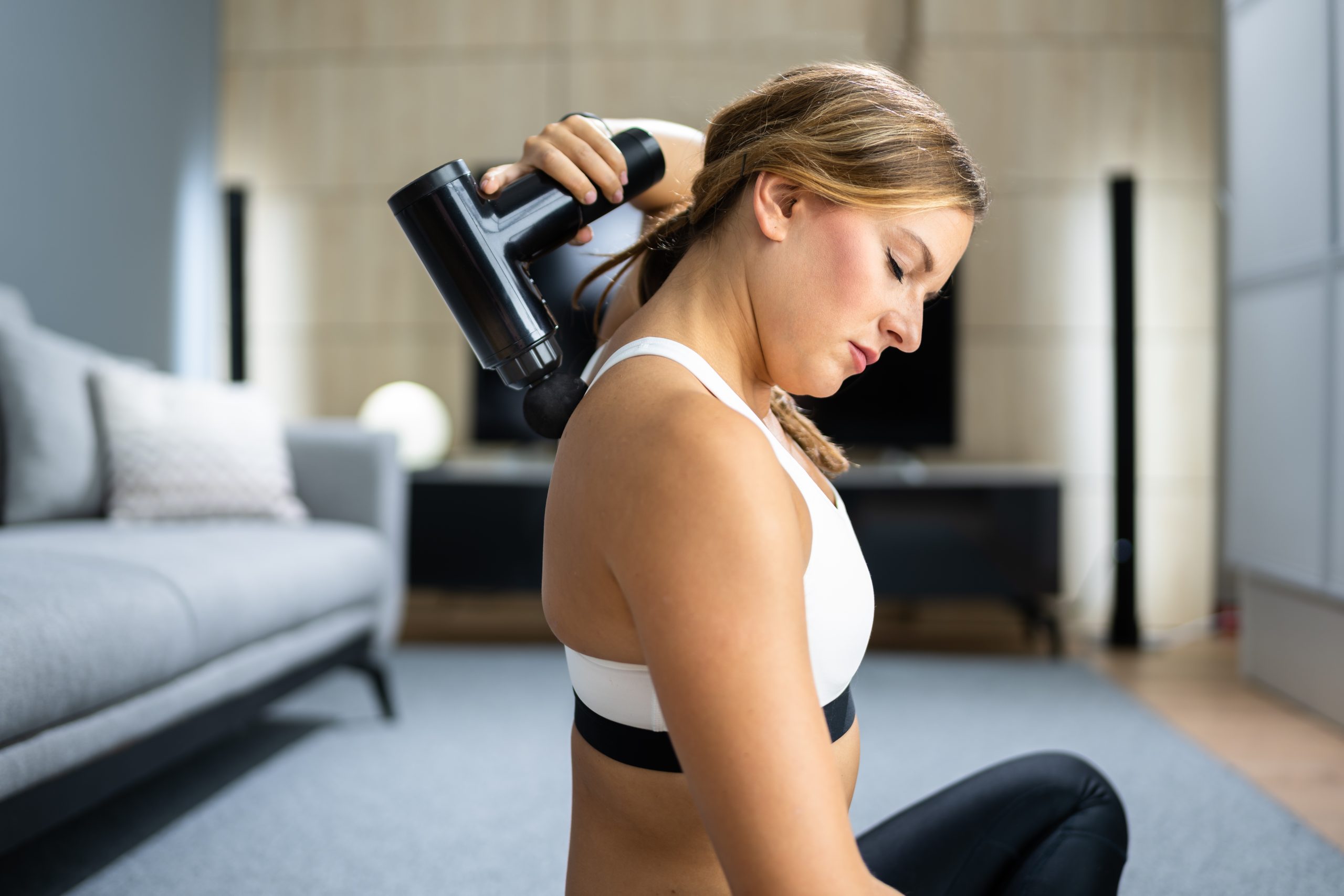

Transform your recovery routine with the right massage gun attachment for each muscle group, targeting specific areas more effectively than a professional massage therapist could with just their hands.
At a Glance
- Different massage gun attachments serve specific purposes – ball heads for large muscles, flat heads for broad areas, bullet heads for trigger points, and fork heads for spine-adjacent muscles
- Let the massage gun do the work – avoid applying excessive pressure and limit use to 1-2 minutes per muscle group
- Start with lower intensity settings and softer attachments on sensitive areas, gradually working up to deeper muscle treatment
- Massage guns can be used both before workouts to relieve stiffness and after exercise to disperse lactic acid
- Combine massage gun therapy with proper hydration, sleep, stretching, and movement for comprehensive recovery
Understanding Massage Gun Attachments
Massage guns have revolutionized home recovery therapy, allowing for targeted muscle relief without professional assistance. Each gun typically comes with multiple interchangeable heads, each designed for specific muscle groups and treatment goals. The attachments transform your device from a general massager into a precision tool that can address unique recovery needs across your entire body. Using the right attachment can mean the difference between effective therapy and potentially painful or ineffective treatment.
Understanding that attachments are not universal is critical – they vary by brand and model, designed to fit specific mechanisms and vibration patterns. Using mismatched attachments can potentially cause discomfort or injury. When shopping for replacement or additional heads, verify compatibility with your specific massage gun to ensure safe and effective treatment.
Common Attachment Types and Their Uses
The ball head attachment is typically the most versatile and commonly used option, ideal for large muscle groups like quadriceps, glutes, and hamstrings. Its cushioned, rounded surface distributes pressure evenly across a wider area, making it gentler and perfect for beginners or sensitive areas. For general recovery sessions, starting with the ball head on larger muscles allows you to gauge how your body responds before moving to more targeted attachments.
The flat head works best on broad muscle areas like the back, chest, and larger leg muscles. Its design covers more territory with each pass, making it efficient for general soreness or pre-workout preparation. The even surface provides consistent pressure across larger areas, making it excellent for warming up muscles before activity or general recovery after moderate workouts. For athletes with larger muscle mass, the flat head offers efficient coverage without sacrificing effectiveness.
Specialized Attachments for Targeted Relief
For specific problem areas or trigger points, the bullet head attachment delivers concentrated pressure exactly where needed. This precision tool works effectively on knots, trigger points, and smaller muscle groups like those in the feet, hands, and around joints. When using the bullet head, apply gentle, sustained pressure for 10-15 seconds rather than aggressively working the area. The focused nature of this attachment means it requires more care to avoid bruising or discomfort.
The fork or dual-point attachment features two prongs designed specifically for muscles alongside the spine, neck, and Achilles tendon area. Its unique design allows for treatment of muscles on either side of these sensitive structures without direct contact with the spine or tendons themselves. This specialized head helps target hard-to-reach areas that often store tension, particularly for those with desk jobs or athletes who experience lower back tightness. When using near the spine, ensure the vertebrae sit between the prongs rather than receiving direct stimulation.
Best Practices for Effective Treatment
Always start with the lowest intensity setting, particularly if you’re new to massage guns or treating a sensitive area. Begin sessions with the ball head on larger, less sensitive muscle groups to warm up tissues before moving to more specialized treatment. Gradually explore other attachments and muscle groups as your comfort level increases. Remember that more pressure isn’t necessarily more effective – let the percussive action do the work rather than forcing the device into the muscle.
Timing matters significantly with massage gun therapy. Limit use to 1-2 minutes per muscle group to prevent overtreatment, and avoid daily intensive treatment of the same areas. For pre-workout activation, use higher frequencies for about 30 seconds per muscle to stimulate blood flow. Post-workout, use moderate settings for up to 2 minutes per area to aid recovery. When addressing chronic issues, consistent brief sessions often yield better results than occasional prolonged treatments.
Creating a Complete Recovery Routine
For maximum benefit, integrate massage gun therapy with other recovery techniques. Proper hydration helps flush toxins released during massage, while adequate sleep allows the body to complete the repair processes initiated by treatment. Combining massage gun sessions with gentle stretching can reinforce increased range of motion, and identifying movement patterns that contribute to muscle tension can prevent recurring problems. This holistic approach turns your massage gun from a simple relief tool into a key component of overall muscle health.
Remember that massage guns should complement rather than replace professional medical advice. If experiencing persistent pain, injury, or health concerns, consult a healthcare provider before beginning massage gun therapy. Regular cleaning of attachments with soap and water followed by disinfection ensures hygienic treatment and extends the life of your device. With proper technique and the right attachments, your massage gun can become an essential tool for maintaining muscle health well into your later years.